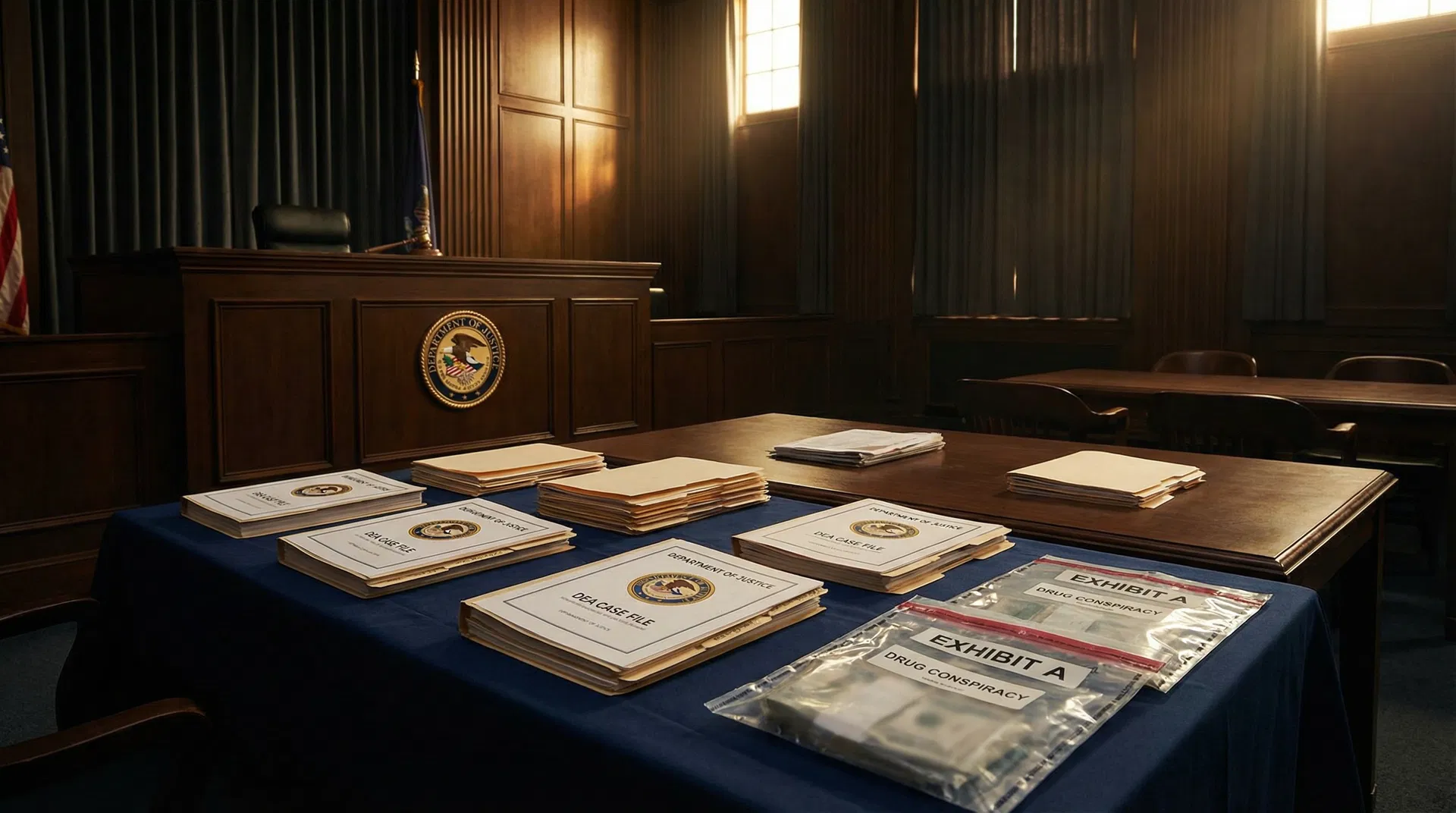
Federal Drug Conspiracy: Understanding a Complex and Serious Charge
Federal drug conspiracy charges are among the most serious and frequently prosecuted offenses in the United States. Unlike many other crimes, you don't necessarily have to be caught in possession of drugs or directly involved in a drug transaction to face a lengthy prison sentence. The very agreement to commit a drug crime, even without its successful completion, can lead to severe federal penalties. At FederalLawyer.com, we understand the intricate nuances of federal drug conspiracy law and the devastating impact such charges can have on individuals and their families. This comprehensive guide aims to shed light on this complex area of federal criminal law, providing valuable insights into its definition, elements, penalties, and defense strategies.
Definition and Federal Statutes
A federal drug conspiracy is essentially an agreement between two or more people to violate federal drug laws. The primary statute governing drug conspiracies is 21 U.S.C. § 846, which states: "Any person who attempts or conspires to commit any offense defined in this subchapter shall be subject to the same penalties as those prescribed for the offense, the commission of which was the object of the attempt or conspiracy." This "object offense" can be anything from manufacturing, distributing, or possessing with intent to distribute controlled substances, as defined under the Controlled Substances Act (21 U.S.C. § 801 et seq.).
It's crucial to understand that the penalties for conspiracy are tied directly to the penalties for the underlying substantive drug offense. This means that if the object of the conspiracy was to distribute a large quantity of a Schedule I controlled substance like heroin, the conspirators face the same severe mandatory minimum sentences and maximum penalties as if they had actually completed the distribution.
Elements of the Offense the Prosecution Must Prove
To secure a conviction for federal drug conspiracy, the prosecution must prove several key elements beyond a reasonable doubt. These elements are:
- An Agreement: There must have been an agreement between two or more persons to commit a federal drug offense. This agreement does not need to be formal or written; it can be tacit or implied. It can be proven through direct evidence (e.g., recorded conversations, written communications) or circumstantial evidence (e.g., actions of the alleged conspirators that indicate a common plan).
- Knowledge of the Conspiracy's Objective: Each defendant must have known the general nature and objective of the conspiracy. They don't necessarily need to know every detail of the agreement or every member involved, but they must understand that the purpose of the agreement was to violate federal drug laws.
- Intent to Join and Further the Conspiracy: Each defendant must have voluntarily and intentionally joined the conspiracy. This means they must have intended to participate in the agreement and to help achieve its illegal objective. Mere association with conspirators or presence at a scene where a drug crime is being discussed or committed is not enough to prove membership in a conspiracy.
- An Overt Act (in some circuits): While 21 U.S.C. § 846 does not explicitly require an overt act in furtherance of the conspiracy, some federal circuits have interpreted the statute to require one. An overt act is any act, however small, committed by one of the conspirators to advance the conspiracy's objective. This act does not have to be illegal itself. For example, making a phone call, driving a car, or renting a storage unit could be considered an overt act if it was done to further the drug conspiracy. It is important to consult with an attorney experienced in the specific circuit where the charges are filed to understand the local requirements.
One of the most challenging aspects for defendants is the concept of "single conspiracy" versus "multiple conspiracies." Prosecutors often try to prove a single, overarching conspiracy to hold all defendants responsible for the actions of others. Defense attorneys, conversely, may argue that if any agreement existed, it was merely a series of smaller, separate conspiracies, thereby limiting their client's liability.
Federal Sentencing Guidelines and Potential Penalties
Federal drug conspiracy charges carry some of the most severe penalties under federal law, largely due to the application of the U.S. Sentencing Guidelines. These guidelines, while advisory since the Supreme Court's decision in United States v. Booker, are still heavily relied upon by federal judges during sentencing.
Mandatory Minimum Sentences
Many federal drug offenses, including conspiracies, are subject to mandatory minimum sentences, particularly when large quantities of controlled substances are involved. These minimums can range from 5 years to 10 years, 20 years, or even life imprisonment, depending on the type and quantity of the drug, the defendant's prior criminal history, and whether serious bodily injury or death resulted from the offense. For example:
- 5-year mandatory minimum: Often applies to conspiracies involving specific quantities of drugs like 100 grams or more of heroin, 500 grams or more of cocaine, 28 grams or more of crack cocaine, or 100 kilograms or more of marijuana.
- 10-year mandatory minimum: Often applies to conspiracies involving larger quantities, such as 1 kilogram or more of heroin, 5 kilograms or more of cocaine, 280 grams or more of crack cocaine, or 1,000 kilograms or more of marijuana.
- 20-year mandatory minimum to life: Can apply if the offense involved very large quantities, or if the defendant has prior felony drug convictions, or if the drug offense resulted in death or serious bodily injury.
These mandatory minimums can be particularly harsh because they limit a judge's discretion to impose a lighter sentence, even if there are compelling mitigating circumstances.
Sentencing Guidelines Calculation
The Sentencing Guidelines calculate a "base offense level" based primarily on the type and quantity of drugs involved in the conspiracy. This base level can then be increased or decreased based on various factors, including:
- Role in the Offense: Leaders, organizers, managers, or supervisors of a criminal activity will receive enhancements. Minor participants may receive a reduction.
- Use of a Weapon: If a dangerous weapon was possessed or used during the conspiracy.
- Bodily Injury or Death: If the offense resulted in serious bodily injury or death.
- Criminal History: Prior convictions significantly increase a defendant's criminal history category, leading to a higher guideline range.
- Obstruction of Justice: Lying to investigators or tampering with evidence.
- Acceptance of Responsibility: A defendant who clearly demonstrates acceptance of responsibility for their offense may receive a reduction.
The combination of the offense level and criminal history category determines the guideline range, which is expressed in months of imprisonment. In addition to imprisonment, penalties can include substantial fines (up to millions of dollars), supervised release terms (often 3 to 5 years, but can be life), and forfeiture of assets derived from or used to facilitate the drug conspiracy.
Common Defenses to Federal Drug Conspiracy Charges
Defending against federal drug conspiracy charges requires a sophisticated understanding of federal law, investigative tactics, and courtroom procedures. An experienced federal criminal defense attorney can employ various strategies, including:
- Lack of Agreement: Arguing that no agreement to commit a drug crime ever existed between the defendant and others. This is a fundamental element the prosecution must prove.
- Lack of Knowledge or Intent: Contending that the defendant was unaware of the conspiracy's objective or did not intend to join it. They may have been present or associated with others, but without the requisite knowledge and intent.
- Withdrawal from the Conspiracy: If a defendant can prove they affirmatively withdrew from the conspiracy before any overt act was committed (or before the conspiracy's objective was achieved, depending on the circuit), they may have a valid defense. Withdrawal usually requires communicating the withdrawal to co-conspirators or law enforcement, or taking affirmative steps to defeat the conspiracy's purpose.
- Multiple Conspiracies vs. Single Conspiracy: As mentioned, arguing that if any agreement existed, it was a series of smaller, separate conspiracies rather than one large one. This can limit a defendant's liability for the actions of others.
- Mere Presence: Asserting that the defendant was merely present at the scene of a drug transaction or discussion and did not participate in or agree to the conspiracy.
- Entrapment: If law enforcement induced an otherwise unwilling individual to commit a crime they would not have committed but for the government's persuasion. This is a difficult defense to prove.
- Challenging Evidence: Moving to suppress illegally obtained evidence (e.g., through unlawful searches and seizures, Miranda violations, or coerced confessions).
- Insufficient Evidence: Arguing that the prosecution has not met its burden of proving every element of the offense beyond a reasonable doubt.
- Identity Defense: If there is a question about whether the defendant was actually involved.
Each case is unique, and the most effective defense strategy will depend on the specific facts and evidence presented by the prosecution.
The Investigation Process: Which Agencies Investigate?
Federal drug conspiracy investigations are typically complex, long-term endeavors involving multiple law enforcement agencies. These investigations often span across state lines and even international borders. Key agencies involved include:
- Drug Enforcement Administration (DEA): The primary federal agency responsible for enforcing the controlled substances laws and regulations of the United States. The DEA is at the forefront of most major drug conspiracy investigations.
- Federal Bureau of Investigation (FBI): While known for investigating a wide range of federal crimes, the FBI often collaborates with the DEA on complex drug trafficking and conspiracy cases, especially those involving organized crime, public corruption, or international dimensions.
- Homeland Security Investigations (HSI): A principal investigative arm of the U.S. Department of Homeland Security, HSI investigates transnational crime and threats, including drug smuggling and money laundering, often working closely with the DEA.
- U.S. Customs and Border Protection (CBP): While primarily focused on border security, CBP agents often interdict large drug shipments, leading to investigations that uncover broader drug conspiracies.
- Internal Revenue Service (IRS) Criminal Investigation (CI): Drug trafficking generates significant illicit income. IRS-CI often joins drug conspiracy investigations to trace and seize assets, investigate money laundering, and prosecute tax evasion related to drug proceeds.
- United States Attorney's Offices: Federal prosecutors from the U.S. Attorney's Office work hand-in-hand with these agencies from the early stages of an investigation, guiding the collection of evidence and ultimately bringing charges.
- State and Local Law Enforcement: Federal agencies frequently collaborate with state and local police departments, task forces, and sheriff's offices, especially when drug operations cross jurisdictional boundaries.
These agencies employ a variety of investigative techniques, including wiretaps, confidential informants, undercover operations, surveillance, search warrants, financial analysis, and controlled buys. The sheer resources and sophisticated methods available to federal investigators make these cases particularly challenging to defend.
Recent Notable Cases
Federal drug conspiracy cases are constantly in the news, highlighting the government's ongoing efforts to combat drug trafficking. While specific case details are often under seal or involve ongoing litigation, general trends and examples illustrate the scope:
- International Drug Cartel Prosecutions: Cases involving major Mexican cartels (e.g., Sinaloa Cartel, Jalisco New Generation Cartel - CJNG) frequently result in large-scale federal drug conspiracy indictments, often involving hundreds of defendants and charges of importing vast quantities of fentanyl, heroin, cocaine, and methamphetamine into the U.S.
- Fentanyl Trafficking Conspiracies: The opioid crisis has led to a surge in federal prosecutions targeting conspiracies to distribute fentanyl and its analogues, often originating from China and Mexico. These cases frequently involve dark web transactions and cryptocurrency.
- Money Laundering Conspiracies: Many drug conspiracy cases include charges of money laundering, as traffickers attempt to legitimize their illicit proceeds. Recent cases have highlighted the use of complex financial schemes and international banking networks.
- "Kingpin" Prosecutions (21 U.S.C. § 848): While distinct from § 846, major drug conspiracy investigations can lead to charges under the "Continuing Criminal Enterprise" (CCE) statute, often referred to as the "kingpin" statute, which carries even more severe penalties, including mandatory life imprisonment for leaders of large-scale drug operations.
These cases underscore the federal government's commitment to aggressively prosecuting those involved in drug trafficking at all levels.
Federal vs. State Prosecution: Understanding the Differences
Drug offenses can be prosecuted at both the state and federal levels, but there are significant differences that impact the accused:
- Jurisdiction: State courts handle violations of state drug laws. Federal courts handle violations of federal drug laws, often involving larger quantities, interstate or international trafficking, or crimes committed on federal property. Federal agencies like the DEA or FBI are typically involved in federal cases.
- Sentencing: This is perhaps the most critical difference. Federal sentences are generally much harsher than state sentences for comparable drug offenses. Federal cases often involve mandatory minimum sentences and the U.S. Sentencing Guidelines, which can lead to lengthy prison terms. State sentencing guidelines vary widely by state but are often more flexible.
- Plea Bargaining: While plea bargaining exists in both systems, federal prosecutors often have less flexibility due to mandatory minimums and strict guidelines. Federal plea agreements can be complex and often involve cooperation agreements.
- Resources: Federal law enforcement agencies and prosecutors typically have far greater resources for investigation and prosecution than their state counterparts.
- Parole: There is no parole in the federal system. Defendants serve nearly all of their imposed sentence, with only a small reduction for good behavior (typically 15% of the sentence after the first year). Many state systems still offer parole.
- Court Procedures: Federal courts follow the Federal Rules of Criminal Procedure and Federal Rules of Evidence, which can differ significantly from state rules.
The decision to prosecute a drug crime federally or at the state level often depends on the scale of the operation, the quantities of drugs involved, and the involvement of federal agencies. If you are facing drug charges, it is paramount to determine whether they are state or federal, as this will dictate the legal landscape you face.
Plea Bargaining Considerations in Federal Drug Conspiracy Cases
Given the severity of federal drug conspiracy charges and the high conviction rate in federal court, plea bargaining is a critical aspect of federal criminal defense. However, these negotiations are often complex and fraught with challenges:
- Mandatory Minimums: Mandatory minimum sentences significantly limit the prosecutor's ability to offer a plea agreement that falls below a certain threshold.
- Cooperation Agreements (Proffers/5K1.1 Motions): One of the most common ways to reduce a federal drug conspiracy sentence is through a cooperation agreement. Under U.S.S.G. § 5K1.1, if a defendant provides "substantial assistance" to the government in the investigation or prosecution of another person, the prosecutor can file a motion for a downward departure from the guidelines and mandatory minimums. This often involves providing information, testifying against co-conspirators, or participating in undercover operations. These agreements are risky and require careful negotiation and legal guidance.
- Safety Valve (18 U.S.C. § 3553(f)): The "safety valve" provision allows certain non-violent, first-time drug offenders to avoid mandatory minimum sentences if they meet five specific criteria, including having no more than one criminal history point, not using violence or a weapon, and truthfully providing all information to the government.
- Rule 11 Agreements: These are formal plea agreements where the defendant pleads guilty to certain charges in exchange for specific concessions from the government, such as dropping other charges, recommending a particular sentence, or agreeing to a sentencing guidelines calculation.
- Trial Considerations: The decision to accept a plea bargain or proceed to trial is monumental. A trial offers the possibility of acquittal but carries the risk of a much harsher sentence if convicted, especially if the defendant does not cooperate.
Navigating plea negotiations in federal drug conspiracy cases requires an attorney with extensive experience in federal court who understands the intricate rules, the specific U.S. Attorney's Office's policies, and the nuances of cooperation agreements.
Why You Need an Experienced Federal Criminal Defense Attorney
Facing federal drug conspiracy charges is an incredibly daunting experience. The stakes are extraordinarily high, with the potential for decades in federal prison, massive fines, and asset forfeiture. Here's why retaining an experienced federal criminal defense attorney from FederalLawyer.com is not just beneficial, but absolutely essential:
- Deep Understanding of Federal Law: Federal drug laws, statutes (like 21 U.S.C. § 846), and the U.S. Sentencing Guidelines are complex and differ significantly from state laws. A federal attorney specializes in these intricacies.
- Experience with Federal Courts and Prosecutors: Federal courts operate under unique rules and procedures. Federal prosecutors are highly skilled and have vast resources. An attorney experienced in this arena understands the federal system's nuances and how to effectively negotiate and litigate within it.
- Investigation and Evidence Analysis: Federal investigations are thorough. An experienced attorney can meticulously review all evidence, including wiretaps, financial records, and informant testimony, to identify weaknesses in the prosecution's case or violations of your constitutional rights.
- Strategic Defense Planning: From challenging the elements of the conspiracy to exploring withdrawal or entrapment defenses, a skilled attorney can craft a robust defense strategy tailored to your specific circumstances.
- Plea Bargaining and Sentencing Mitigation: Navigating cooperation agreements, safety valve provisions, and other avenues for sentence reduction requires expert negotiation skills and a deep understanding of federal sentencing policy. An attorney can advocate for the lowest possible sentence, even in the face of mandatory minimums.
- Protecting Your Rights: Federal agents are trained to build strong cases. An attorney will ensure your rights are protected throughout the investigation and legal process, from initial questioning to trial.
- Peace of Mind: Having a knowledgeable and aggressive advocate by your side can provide immense peace of mind during one of the most challenging periods of your life.
If you or someone you know is under investigation for or has been charged with federal drug conspiracy, do not delay. The sooner you engage an experienced federal criminal defense attorney, the better your chances of achieving a favorable outcome. Contact FederalLawyer.com today for a confidential consultation to discuss your case and understand your legal options.